
Xanthan Gum: The Versatile Thickener Powering Your Favorite Products
What Exactly is Xanthan Gum? The Science Made Simple
Xanthan Gum is a polysaccharide, which is a long chain of sugar molecules (primarily glucose, mannose, and glucuronic acid). Its production is a classic example of industrial fermentation, similar to the process used for brewing beer or making yogurt.
The process involves:
- The Bacterium: A specific strain of the bacterium Xanthomonas campestris is used. This bacterium is found naturally on leafy green vegetables like cabbage and is responsible for causing black rot.
- Fermentation: The bacteria are placed in a fermentation tank with a nutrient-rich broth containing carbohydrates (like corn sugar or sucrose), nitrogen, and other minerals.
- Production and Purification: As the bacteria consume the sugar, they produce Xanthan Gum as a protective slime or biofilm. After fermentation is complete, the Xanthan Gum is precipitated (usually with isopropyl alcohol), dried, and milled into a fine, white or off-white powder.
The result is a highly effective and consistent thickening and stabilizing agent. Its safety and efficacy have led to its approval as a safe food additive by the U.S. Food and Drug Administration (FDA) and its listing in the Food Chemicals Codex (FCC). It is also approved for use in organic products.
Key Properties and Functional Advantages: Why It's So Effective
- Powerful Thickening and Rheology Control:
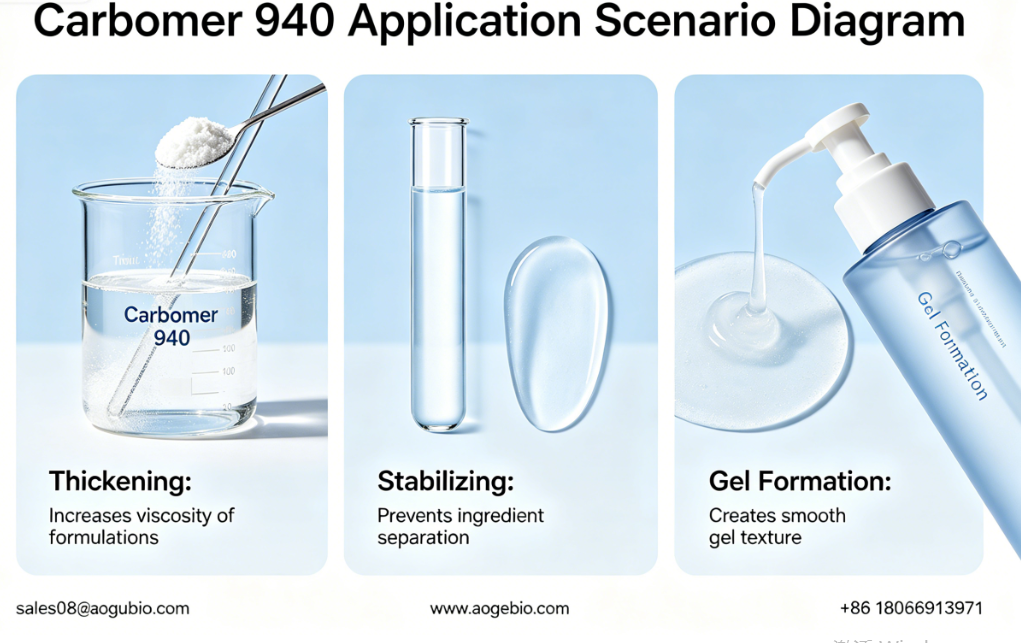
Even at very low concentrations (typically 0.1% - 1.0%), Xanthan Gum can significantly increase the viscosity (thickness) of a liquid. More importantly, it exhibits shear-thinningbehavior. This means:
At rest (in the bottle), it is thick, which helps suspend particles and prevent separation.
When shear is applied (by shaking, pouring, or rubbing on the skin), it becomes thin and flows easily.
Once the shear force stops, it instantly returns to its thick state.
- Excellent Stability:
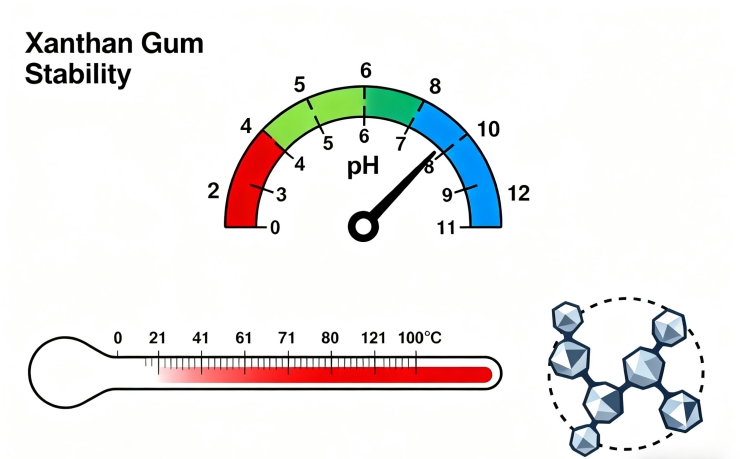
pH Stability:It remains effective across a broad pH range, from highly acidic (pH 2) to alkaline (pH 12) environments.
Thermal Stability: It is stable across a wide temperature range and can withstand freeze-thaw cycles without breaking down.
Enzyme Resistance: It is resistant to enzymatic degradation, meaning it won't lose its thickening power over time in complex formulations.
- High Water-Holding Capacity:
Xanthan Gum has an exceptional ability to bind with water, making it an effective humectant in cosmetic formulations. It helps keep products moist and prevents them from drying out.
-
Suspension of Particles:
Its viscous network is excellent at suspending solid particles, such as pigments in makeup, exfoliating beads in scrubs, or herbs in sauces, preventing them from settling to the bottom.
- Compatibility and Synergy:
Xanthan Gumworks well with a wide range of other ingredients. It is particularly synergistic with other hydrocolloids like Guar Gum and locust bean gum, creating even thicker gels or improved gel textures.
Applications in Cosmetics and Personal Care
- Stabilizing Emulsions:
In lotions and creams, which are mixtures of oil and water, Xanthan Gum is used to thicken the water phase. This helps prevent the oil and water from separating over time, ensuring a stable, homogenous product. A study in the International Journal of Cosmetic Sciencehas demonstrated the effectiveness of polysaccharides like Xanthan Gum in stabilizing oil-in-water emulsions by increasing the viscosity of the continuous phase (Tadros, 2004).
- Creating Gels:
It is a primary ingredient in creating clear or opaque gels:
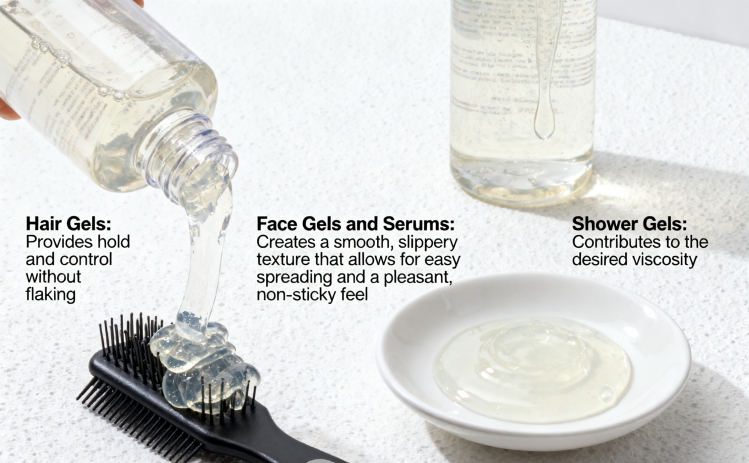
Hair Gels: Provides hold and control without flaking.
Face Gels and Serums: Creates a smooth, slippery texture that allows for easy spreading and a pleasant, non-sticky feel.
Shower Gels: Contributes to the desired viscosity.
- Suspending Agents:
As mentioned, it is perfect for:
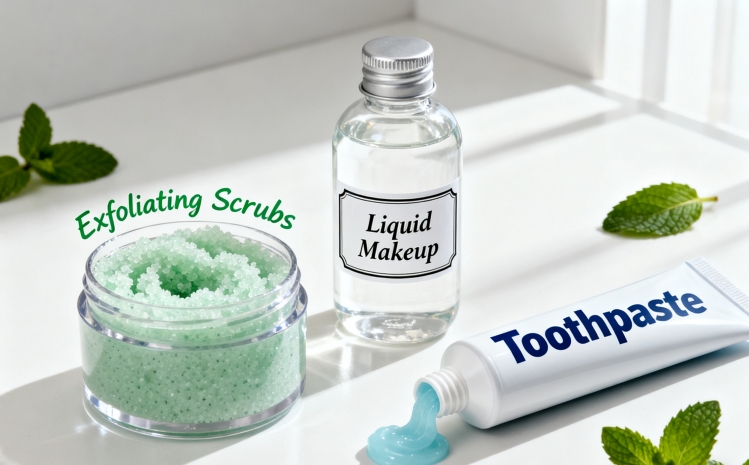
Exfoliating Scrubs: Keeps abrasive particles evenly distributed.
Liquid Makeup: Suspends color pigments to ensure consistent application and color payoff.
Toothpaste: Helps suspend abrasive agents like silica and flavor oils.
- Enhancing Skin Feel:
Xanthan Gum imparts a smooth, silky feel to formulations. It can reduce the "drag" sometimes associated with other thickeners, improving the sensory experience of the product.
- Natural and "Clean-Beauty" Formulations:
Because it is produced through fermentation of plant-based sugars, Xanthan Gum is widely accepted in natural, organic, and vegan cosmetic lines as an alternative to synthetic thickeners.
Safety and Considerations
Xanthan Gum has an excellent safety profile. It is generally recognized as safe (GRAS) for consumption and topical application. However, there are a few considerations:
- Dust Inhalation: As with any fine powder, inhalation of dust during industrial handling should be avoided.
- Sensitization: Allergic reactions to Xanthan Gum are extremely rare, but as with any ingredient, patch testing is recommended for individuals with very sensitive skin.
- Usage Level: Using too much Xanthan Gum can lead to a sticky, stringy, or overly gummy texture. Formulators use it at precise low percentages to achieve the desired effect.
A comprehensive safety assessment published in the International Journal of Toxicology concluded that Xanthan Gum is safe as a cosmetic ingredient in the present practices of use and concentration (Fiume et al., 2017).
Conclusion: The Small Ingredient with a Big Impact
From its humble beginnings as a bacterial byproduct to its status as a global industrial staple, Xanthan Gum is a testament to the power of biotechnology. Its unique ability to provide thickness, stability, and sublime texture with incredible efficiency makes it an indispensable tool for food scientists and cosmetic chemists alike.